The journey from a cancer diagnosis to survivorship is rarely a straight line. More often, it is a complex maze of specialists, appointments, and insurance hurdles. An oncology nurse navigator serves as a vital guide through this landscape, helping patients and their families dismantle the obstacles in their way. By managing these burdens, navigators ensure that the patient’s focus remains exactly where it belongs: on their treatment and healing.
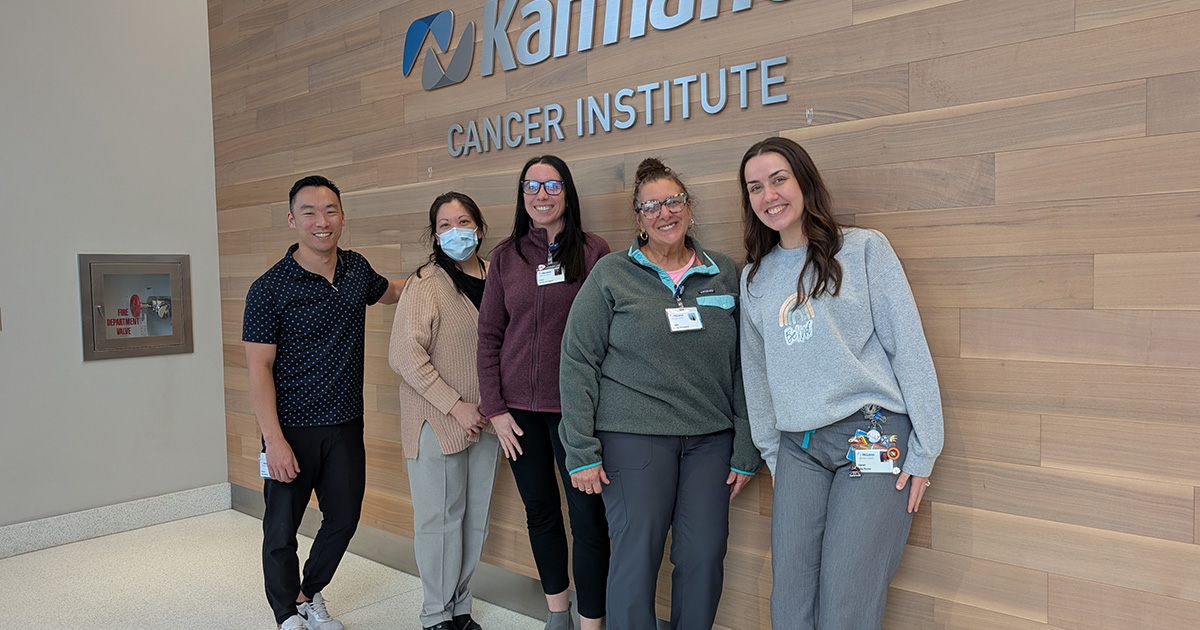
The oncology nurse navigators at Karmanos Cancer Institute at McLaren Greater Lansing are an essential part of the patient’s plan of care and the point of contact to help facilitate timely and quality access to care, but they also build lasting relationships throughout their cancer journey and beyond, easing the stress that can come with a cancer diagnosis.
“I describe my job to my patients as I am their bulldozer to any barriers to their plan of care,” said Sarah Edwards, RN, who supports patients with GI or gynecological-related cancers. “There can be a lot of doctors involved — from medical oncologists to radiation oncologists and surgical specialists, so we want to make sure everyone’s on the same page and that the patient and their family are feeling supported throughout their entire process.”
Navigators often meet with patients and families at the beginning of their diagnosis and become a lifeline for the patient, answering any questions, assisting with scheduling appointments, and can also attend appointments with the patient for added support if needed.
Erica Williams, RN, and Pattie Zea, RN, serve as the dedicated breast cancer nurse navigators. They often meet with patients at the very beginning of their journey—sometimes even before a diagnosis—to provide a supportive introduction to the resources available. In addition to their navigation work, Erica and Pattie facilitate a support group for young women cancer survivors, which meets on the last Tuesday of every month.
“We’re here to support you through every step of the journey toward survivorship, which includes beyond medical care,” said Williams. “We provide essential resources like access to our social workers, our food bank, and transportation assistance as well.”
Additionally, oncology nurse navigators have access to external resources, including grants, that can help patients who may need financial or other assistance during their treatment.
Studies suggest that having an oncology nurse navigator as part of the plan of care creates an early and trusting connection with patients and their family caregivers, giving them better access to high-quality care, reducing stress, improving self-care, and avoiding complications.
“By providing a point of contact for our patients, our goal is to make things as simple as possible. I am here to pick up the phone when they call. I will get them the answers they need, so they can focus on their recovery and healing,” says Kevin Maier, RN, oncology nurse navigator for lung and esophageal cancer patients.
Karmanos Cancer Institute at McLaren Greater Lansing has a robust oncology nurse navigator program, providing personalized support services, with a dedicated team member who specializes in resources based on your specific cancer diagnosis. The program currently has five oncology nurse navigators, including Kathleen Shabani, RN, who oversees genitourinary and head-and-neck oncology patients. For more information about the nurse navigator program or to contact any of our navigators, click here.
To learn more about Karmanos Cancer Institute at McLaren Greater Lansing, click here.
To read more articles on health and wellness, click here.